LOKVENEC DIGITAL
Lokvenec Digital is a magazine at the intersection of style, substance, and self-discovery—crafted for the modern muse.
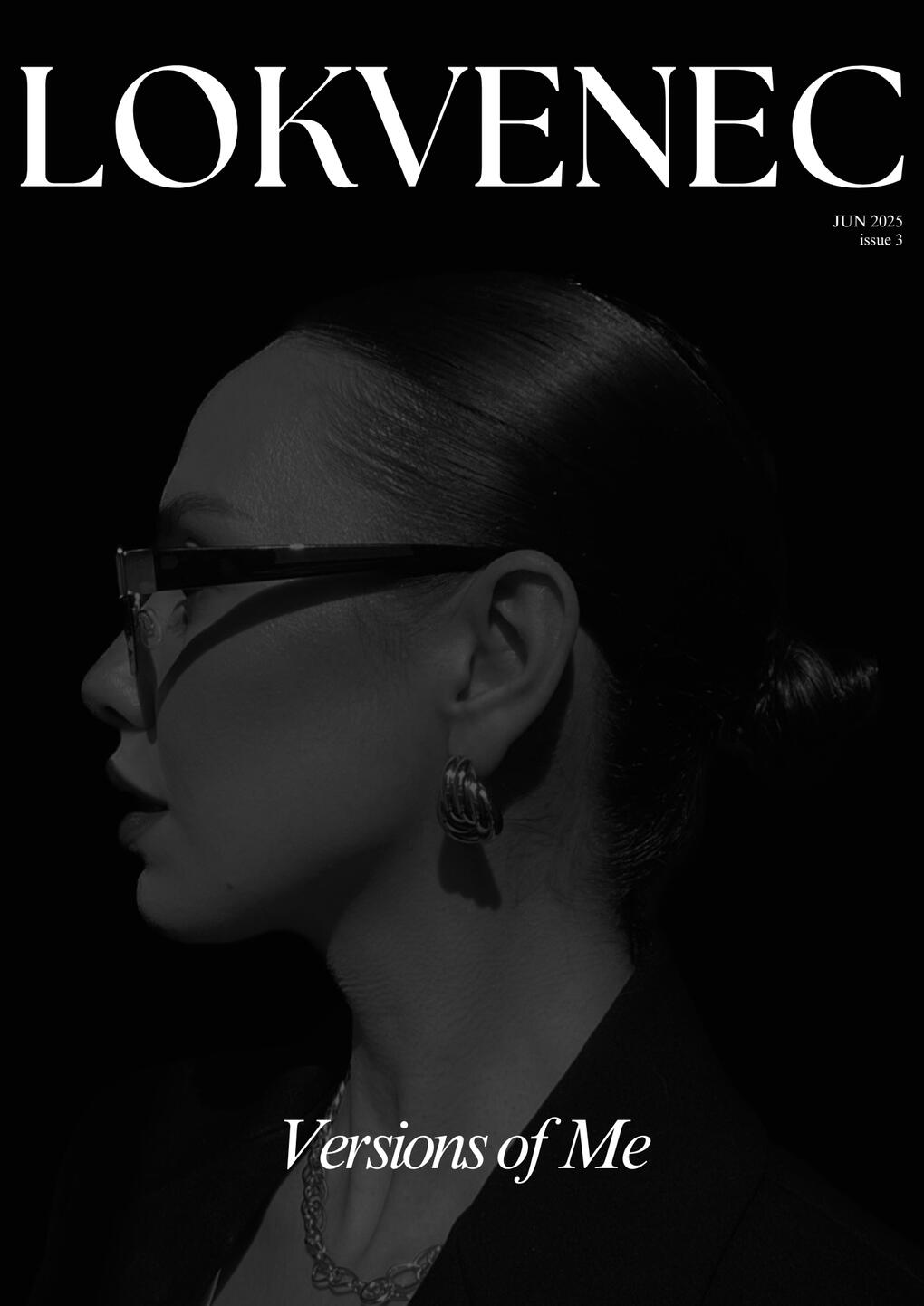
A curated collection of essays, reflections, and soft questions for the season ahead.This issue explores inner rhythm, emotional clarity, and the quiet power of feminine energy.If you’d like to receive gentle extras, behind-the-scenes thoughts, and future issue updates,
you can subscribe here to the newsletter to stay connected between issues.
There’s something quietly powerful about starting over.Not the loud kind with a big announcement or a timeline to prove. But the slow, steady unraveling of what no longer fits — and the brave, quiet choosing of what does.I used to think strength meant being unshakeable. That if I broke, I failed. But the truth is: what saves me isn’t hardness — it’s flexibility. It’s learning to bend, reshape, and return to myself over and over again. Without shame.I’ve reinvented myself more than once. Not in the dramatic, overnight transformation way — but in the small, persistent ways that don’t make it to Instagram. In the moments where I paused and asked: Does this still feel like me? In the times I let go of versions of myself that once felt like home.What I’ve learned is this: labels are comforting, but also confining. The more I try to define myself, the more I start to shrink. So I’ve stopped trying to explain it all. I let myself evolve — quietly, awkwardly, beautifully.There is power in not needing to be one thing. Power in showing up — true to myself — again and again.And so, this isn’t a comeback. It’s not even a new beginning.It’s just me — choosing to welcome every new version of me with open arms.
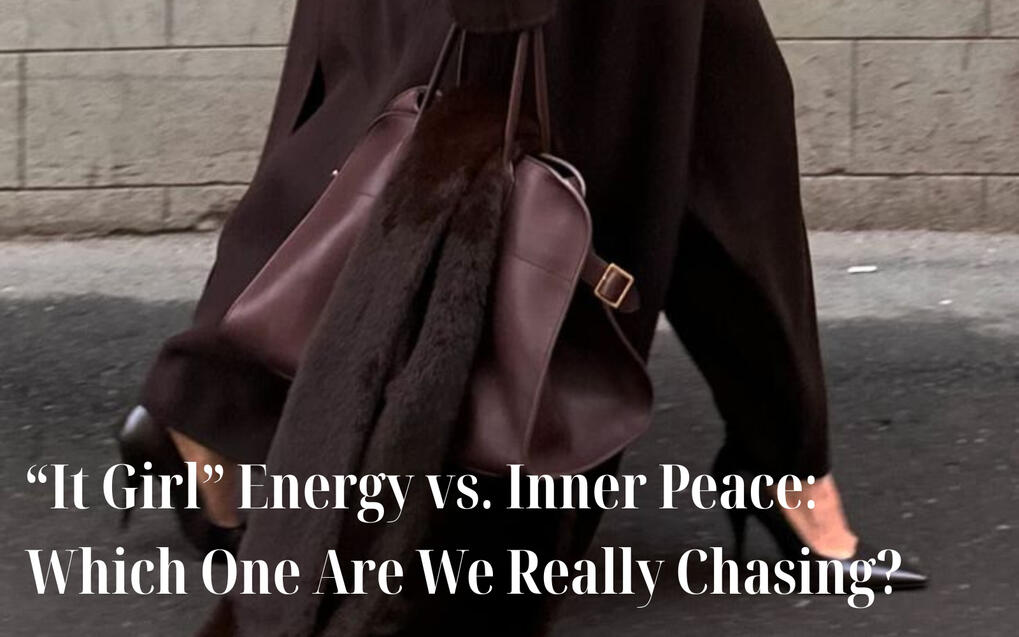
There's a certain type of girl we all know. She's effortless. Cool. A little undone but perfectly timed. She's trending without trying — or so it seems. The “It Girl.” The muse of our moodboards and the subtext of our online lives.We like to believe we're above it. But the scroll says otherwise.We save the outfits. We screenshot the nails. We notice who's being photographed and who's getting sponsored — and somewhere between admiration and aspiration, we start asking different questions: What's wrong with how I show up? Why don't I feel like that?It's subtle. But it's constant. A quiet tug toward visibility, toward proving that we're relevant, beautiful, desirable — even if we're already whole.Inner peace doesn't always perform well online. It doesn't sparkle. It doesn't beg to be shared. It doesn't scream “main character.” It just… is. Soft. Private. Untouched by algorithm.But here's the catch: sometimes even our healing becomes a performance. We say “it's just for me” — but part of us still hopes someone sees. Likes. Agrees. Approves.And so we drift further from ourselves, even when we're trying to do the “right” thing.What if we stopped trying to be the It Girl — and asked instead what that image is trying to compensate for? What if we romanticized stillness instead of speed, softness instead of spectacle, self-trust instead of applause?What if we realized we already are the It Girl — not because of how we look or dress or show up online, but because of how deeply we're learning to live in our own presence?Magnetism has never been about aesthetics. It's always been about energy. And yours doesn't need to go viral to be powerful.
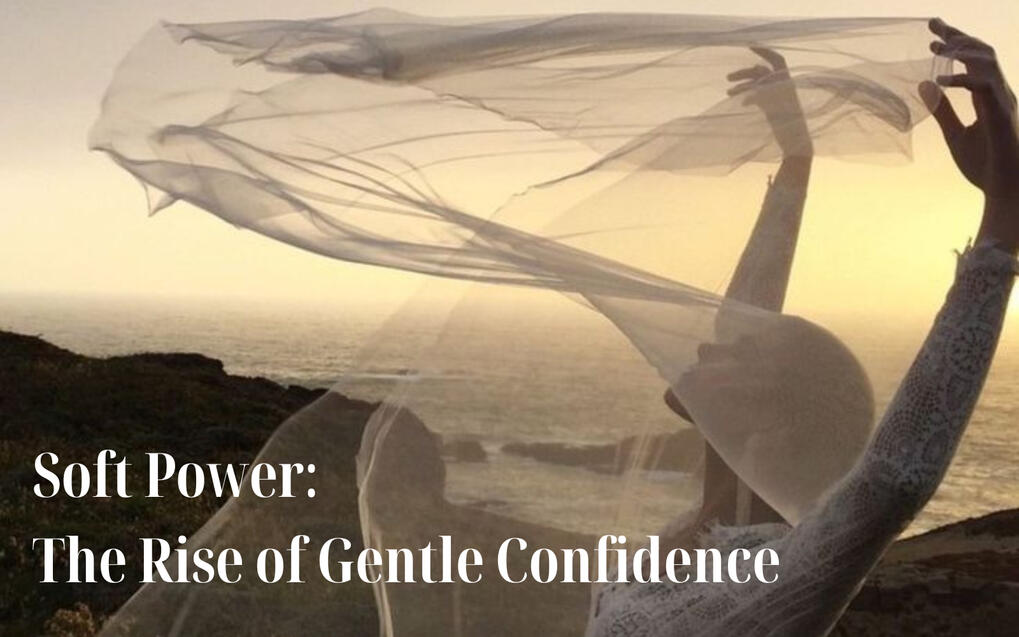
There's a quiet revolution happening—and it doesn't shout to be heard.We're starting to redefine what power looks like. For so long, we've been taught that power must be loud, sharp, and always on the offense. But a new kind of confidence is rising. One that doesn't need to dominate the room to own it.Soft power lives in how you carry yourself when no one is watching. It’s emotional intelligence. Eye contact. The calm tone in your voice when everyone else is escalating. Its boundaries held with kindness. It's grace that doesn't ask for applause.In a culture obsessed with hustle, clapbacks, and “main character energy,” soft power invites us to lead from a deeper place. It's not about being passive or quiet—it's about being sure. Sure of your worth. Sure of your choices. Sure that you don't need to perform toughness to be strong.This shift is especially visible among Gen Z and Millennial women. We're building careers, relationships, and personal brands around something more sustainable than burnout and bravado. We're choosing nuance over noise. We're realizing that softness isn't weakness—it's a strategy.And maybe that's the real flex now. The ability to move through the world with a sense of grounded self-respect. Not shrinking, not shouting—just… sure.
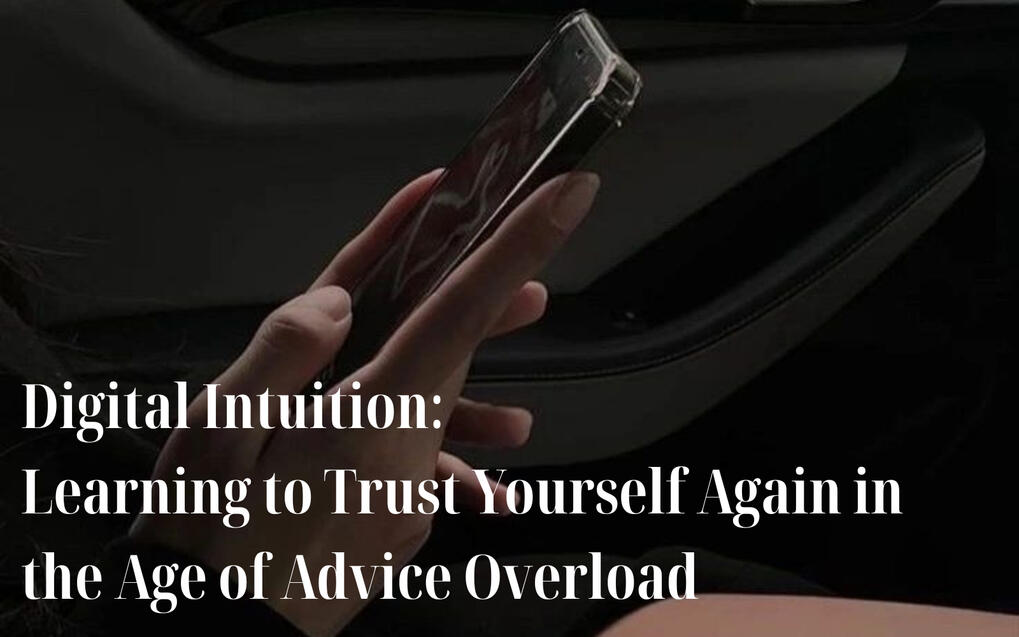
There's no shortage of advice these days. You open your phone and you're met with reels about boundaries, threads on healing, and hot takes about rest, routines, and who you should be by now.
It's helpful, sometimes. It's overwhelming, often.The more we scroll, the more we gather second-hand clarity—borrowed opinions, borrowed truths. What we don't realize is how quietly our own voice begins to shrink under the noise. Even the softest, most well-intentioned content can make us forget what we already knew.
Digital intuition is the act of turning back inward. Of pausing after you consume something and asking: Does this actually feel true for me?
Not “should I agree with this?”
Not “do they have a point?”
Just: Is this mine?Because if we're always collecting answers, we never hear our own questions. If we're always reaching outward, we forget how to check in. And if we're always watching other people's wisdom perform well online, we lose sight of the quieter, slower wisdom we carry.
Sometimes the most radical thing you can do is mute everyone—even the helpful ones—and listen to yourself without commentary.There is still a place within you that knows what feels right, what feels enough, what feels real.And you don't have to prove that knowing to anyone.
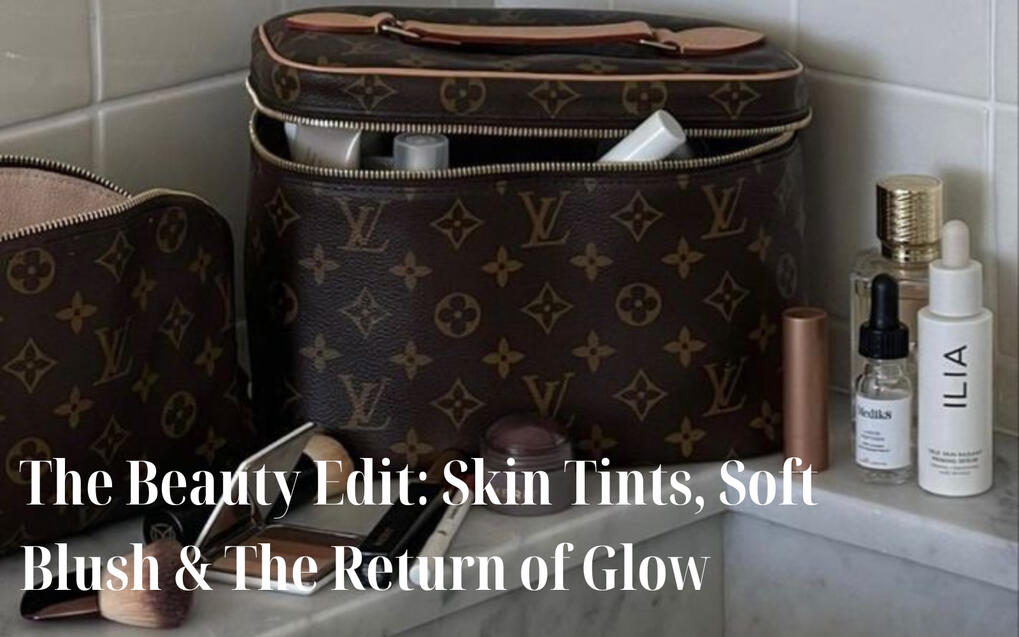
There's something timeless about a soft, radiant face. A quiet glow that catches the morning light. A tint that evens, without hiding. A blush that feels like a memory rather than a statement.This summer, beauty feels lighter — not in effort, but in energy. Products that melt into the skin, enhance your natural rhythm, and let your features breathe without demanding attention.Whether you love a full routine or prefer a quick moment in front of the mirror, these are pieces that support both. No rules, just feeling good in your skin.Here's what's worth reaching for this season — soft textures, hydrating formulas, and affordable products available in local drugstores across Macedonia.
Skin Tints That Feel Like Skincare
- Catrice Nude Drop Tinted Serum Foundation
Light coverage, weightless feel, and that subtle glow-from-within look. A summer essential.- L’Oréal Paris True Match Nude Plumping Tinted Serum
Infused with hyaluronic acid, this tint feels more like skincare than makeup — and looks like your skin, but rested.
Cream Blush, The Soft Way
- Essence Baby Got Blush
Creamy, buildable, and made for that just-back-from-a-walk flush.- Essence Juicy Bomb Cheek & Lip Tint – Juicy Berry
It melts into the skin with a gel-like texture and doubles as a lip stain for that “bitten” look. Lightweight, pretty, and perfect for minimal makeup days.
Glowy Skin Finishes Without Shimmer
- Catrice Glow Lover Oil-Infused Highlighter
Not sparkly — just glossy. Tap on cheekbones, eyelids, even lips for that fresh-faced effect.- Essence Hello, Good Stuff! Face Oil
Add a drop under makeup or mix into your tint for a more dewy base.

It's a quiet kind of question. The kind that doesn't demand an answer, but reveals something just by being asked.You see the dream apartment, the relationship, the skincare haul, the latest capsule wardrobe on TikTok — and your gut says: I want that too.But sometimes it's not about the thing.
It's about being seen wanting the thing.
About how the wanting looks.
How it photographs.
What it says about you.We've learned to curate our desire. To want aesthetically. Publicly. In ways that signal taste, discipline, and softness all at once. It's a performance of effortlessness — a kind of controlled hunger. Romantic, but never too messy.And that performance can be exhausting.It's not that we're faking it. It's just that some of our wants have become so tangled with identity and visibility that we forget where they even came from.But the body remembers. The real wanting is quieter. It's not about being seen — it's about feeling. It's about the way a space makes you breathe deeper, the way a certain pace feels like exhale, the way some mornings are sacred simply because no one else is watching.So the next time a want appears, ask gently:Is this mine?Or is it someone else's dream wrapped in soft lighting?Both answers are okay.
But there's power in knowing the difference.Because real desire is a compass.
And pretending to want what you don't drains you before you even begin.
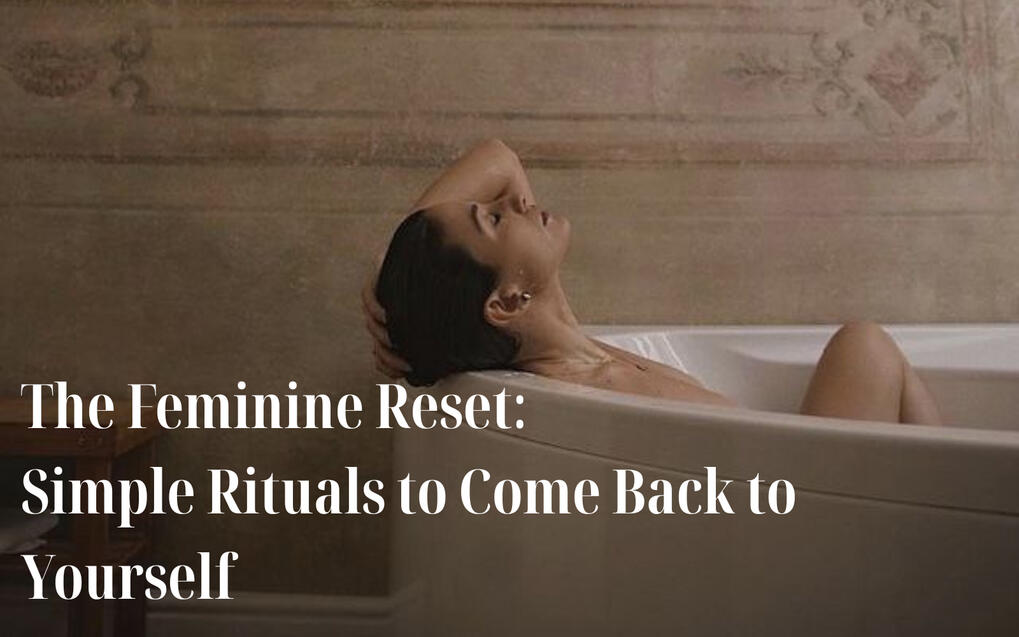
Sometimes, it's not burnout. It's disconnection.From our bodies. From our softness. From the rhythm we once had — the one that moved with feeling instead of pressure. The one that didn't need to prove anything.A feminine reset isn't about becoming someone new. It's about returning. To what already feels safe, real, and nourishing. To the rituals that remind you who you are when no one's watching.And often, it's in the smallest things.A signature scent that slows your exhale.
A silk robe that doesn't wait for a special occasion.
A playlist with no lyrics, just warmth.
Brushing your hair slowly — not because you're going anywhere, but because it deserves attention too.
Lighting a candle in the middle of the day.
Journaling one soft sentence instead of 30 breakthroughs.We're taught to chase the “glow up.” But maybe it's not about doing more, changing more, fixing more. Maybe it's about curating the energy around you until it feels like it fits your nervous system. Like your home is holding you. Like your body is safe to return to.Your feminine isn't something you need to activate — it's something you need space to feel again.And that doesn't require a perfect morning routine or 10-step night serum. Just the willingness to slow down enough to ask: What would feel good today?Then actually listen.That's the reset.
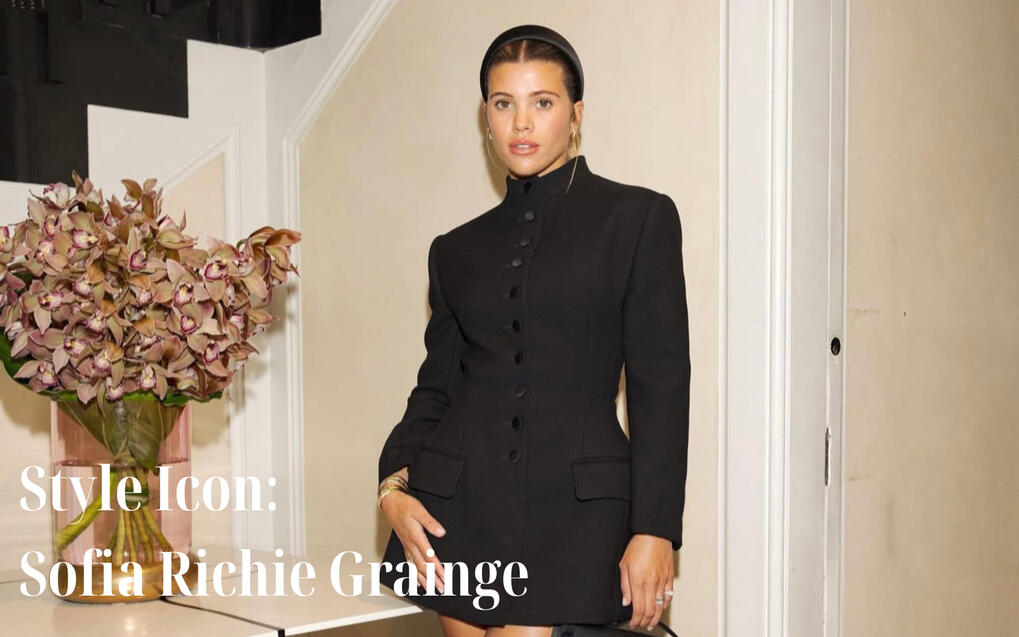
An Editorial Look at Quiet, Composed DressingSofia Richie Grainge's style isn't groundbreaking — and that's the point.Her rise as a fashion reference isn't built on innovation. It's built on consistency. Neutrals, structure, restraint. A clean, considered look that offers calm in a fashion landscape often obsessed with chaos and color.Her appeal lies in how put-together she appears without looking like she tried. It's styling that doesn't distract — it refines. Silhouettes are soft but precise. Palettes are muted, mostly monochrome. Hair is slick, makeup minimal, and details are subtle: a narrow belt, a sharp part, a perfect shoulder line.It's not performative. It's polished.
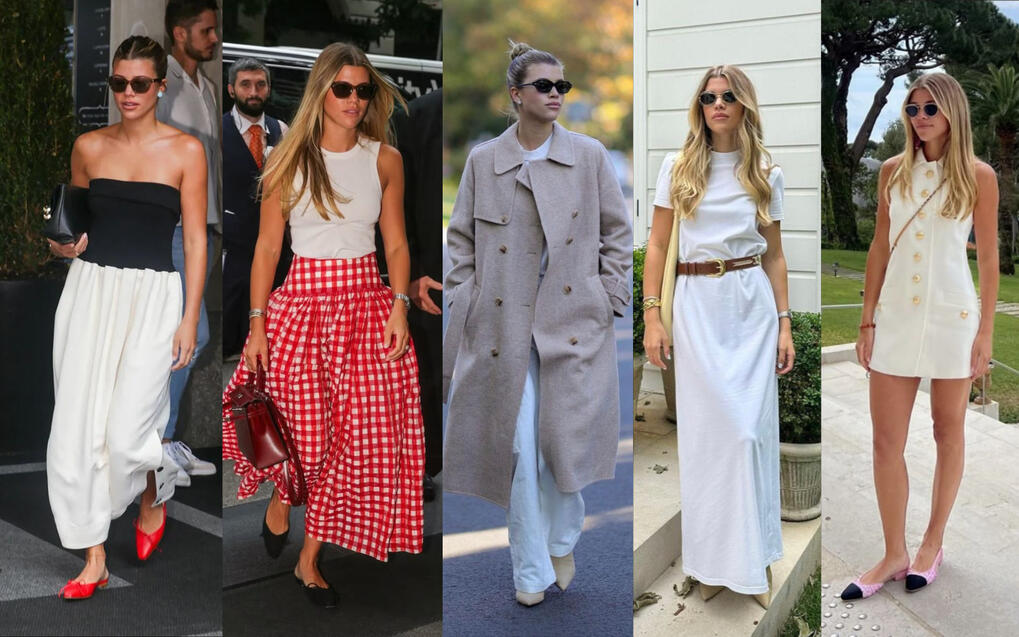
The Wardrobe Breakdown
Shirting: Crisp white or pale blue button-downs, oversized and usually half-tucked
Trousers: Straight-leg, high-waisted, tailored. Think neutral shades: cream, camel, charcoal
Soft suiting: Lightweight blazers worn with matching trousers or over midi dresses
Knitwear: Slim cardigans, ribbed tanks, or fine-gauge cashmere tucked into trousers
Midi skirts: Silk or satin cuts paired with basics or sharp blazers
Accessories: Quiet gold jewelry (thin hoops, chain necklaces), structured handbags, loafers or slingbacks
Hair & makeup: Slick bun, brushed-up brows, nude lips, clear skin
This aesthetic isn't new — it's just consistent. And consistency, in a time of constant reinvention, feels almost radical.You don't need to emulate her.
But if you're drawn to that sense of ease, the formula is simple: choose quality over noise. Pieces that don't speak loudly but speak well.
You don't always notice when your teenage self shows up.
She hides in the way you apologize too quickly. In the way you compare yourself in silence. In the way you feel too much — or not enough — in rooms that remind you of hallways you once walked through, unsure of your place.Psychologically, our adolescence is where many of our core self-beliefs are formed.
We begin to internalize: I am loved when I perform. I am safe when I please. I belong if I stay small.
Not because we're weak, but because we're adapting. We're absorbing the world to survive it — through peers, parents, teachers, expectations.But years later, even in adult bodies, we still carry those rules like unspoken contracts.You may no longer be a teenager.
But the part of you that felt misunderstood, overlooked, or hyper-aware of their flaws?
She still remembers.Healing your inner teen isn't about rewriting the past — it's about responding differently in the present.Instead of pushing her away when she feels too dramatic, you listen.
Instead of criticizing her sensitivity, you honor it.
You don't rush to fix her — you learn to sit beside her.This is how we unlearn shame.
Not by becoming someone new, but by giving the version of ourselves who was never fully seen a space to exhale.Self-acceptance starts there — not with perfection, but with permission.
To be a little messy. A little loud. A little unsure.
To stop performing your worth and start remembering it was never something you had to earn.You are not who you were at sixteen.
But she shaped you — and she deserves softness too.
Therapy-speak is everywhere now.Words like “attachment style,” “trauma bond,” “boundaries,” and “nervous system” show up in captions, reels, and relatable memes — often shortened into 15 seconds of digestible, well-lit advice.And in many ways, that's progress.
We're talking more openly about mental health. We're breaking taboos. We're seeing ourselves in stories we once didn't have language for.But there's a line — and more often lately, we're crossing it.Social media wasn't built for nuance. It rewards speed, visibility, confidence. And in that ecosystem, complex psychological ideas often become flattened into trendy, viral statements that oversimplify human experience.Not everything is a red flag.
Not every miscommunication is gaslighting.
Not every uncomfortable feeling means your nervous system is dysregulated.The risk isn't just misinformation — it's disconnection.
When we turn every emotion into a diagnosis and every person into a pattern, we stop being curious about ourselves. We stop making room for context, repair, or personal growth — and instead lean on content to validate our hurt.That's where “TikTok therapy” can start to harm:
Not because it's malicious, but because it gives us half-truths dressed up as absolutes.So how do we protect our mental health in a space that claims to support it?We remember that real healing is often unshareable.
That therapy is more than buzzwords — it's relationship, process, nuance.
That being emotionally informed doesn't mean we stop listening. It means we listen deeper.Content can spark awareness.
But growth still happens offline.

Some dreams don't die. They fade.
Quietly, respectfully. They slip from obsession to memory — a version of you that once felt like the only way forward. And for a while, it really was.There was a time I believed success meant working 24/7.
That rest was weakness. That slowing down meant falling behind. I romanticized the hustle — the early mornings, the overfilled schedule, the constant productivity. I thought that version of me — sharp, disciplined, always "on" — was the one who would get me there.But over time, I started noticing the cost.
My creativity dulled. My nervous system never exhaled. And most painfully, I stopped enjoying the very things I once loved working for.Psychologically, we build identities around imagined futures. They help us cope, create, and push through difficult seasons. But sometimes, those futures become cages — identities we wear long after they've stopped fitting.Letting go of that dream life wasn't giving up.
It was returning. Reconnecting. Relearning what my version of success actually looks like.I started softening. Not because I lost ambition — but because I finally saw that for women, softness is not the opposite of success. It's often the path to it.
Flow creates more than force ever did.
Rest nourishes clarity.
Presence births ideas.The new version of my dream may not look as curated or as loud. But maybe that's the sign I'm living it. Not chasing it. Not performing for it. Just… being in it.Letting go isn't weakness. It's wisdom.
It means trusting that who I've become knows more than who I once thought I had to be.I'm not softer because I stopped trying — I'm softer because I finally understand what I need.
I respect my time, my work, and my rhythm more than ever.
And the result? I'm more fulfilled, more creative — and more successful than I ever was when I was running on empty.The life I have now isn't smaller.
It's deeper. More intentional.
And most importantly — it feels like mine.